
In an RV park vs. campground choice, you trade a wooded campsite picked for its setting for an RV site picked for easy arrival and utilities. The right choice depends on the kind of trip you want, not just the name on a sign.
Campgrounds generally center the outdoor setting, while RV parks generally center RV access and convenience. Individual properties vary, so tent campers, families, and RV travelers should check whether a place suits their needs before booking.
Compare the typical features first, then weigh price, stay length, and how well each option fits your plans.
Key Takeaways
- Campgrounds often put the outdoors first.
- RV parks often make arrival and RV setup easier.
- RV resorts add amenities and planned activities.
- Property features can differ from the label.
- Check site details before you book.
RV Park vs Campground: What Sets Them Apart?
The setting and intended use usually reveal more than the name on the sign. A campground often makes the natural surroundings part of the stay, while an RV park often puts RV access and practical travel needs first.
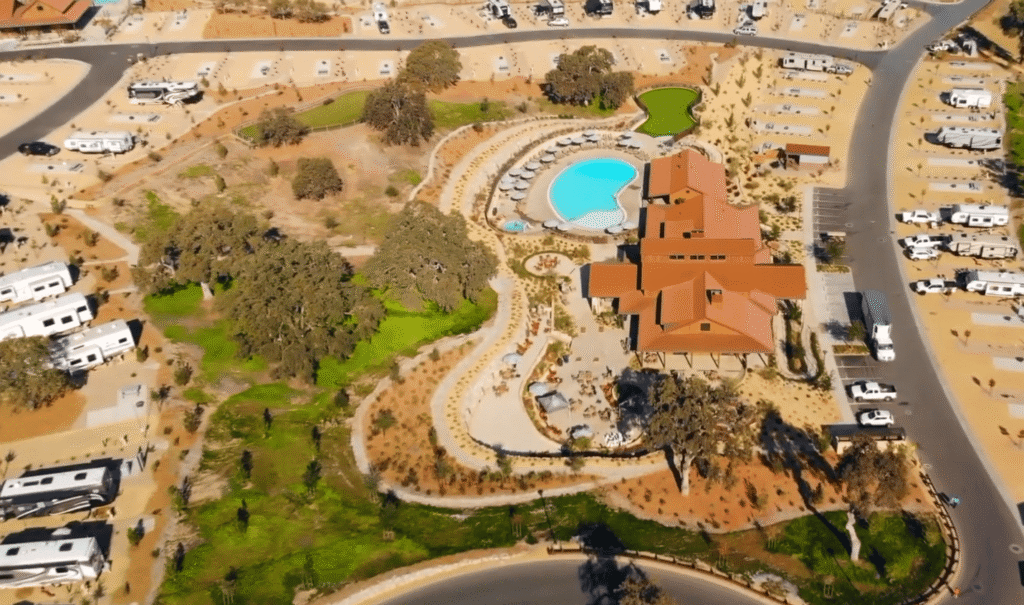
These are common patterns, not guarantees. Some properties offer both a scenic setting and convenient RV facilities, so check the listing for the experience you want.
Use the property’s setting and intended use as your guide, not its name alone.
| Feature | Campground | RV park | Typical distinction |
|---|---|---|---|
| Main draw | Outdoor setting | RV convenience | Landscape or travel efficiency |
| Typical guests | Tents and RVs | Primarily RV travelers | Broader mix or rig-focused |
| Site setting | Natural or wooded | Open, level layout | Scenery or maneuvering ease |
| Hookups | None or partial | Usually full | Check the individual listing |
This quick view covers the usual RV park vs campground pros and cons. A park may offer natural features, and a campground may have useful RV facilities, so treat each row as a starting point.
For your choice, think about what you want to do after you arrive. The campground experience often begins with the landscape itself, then shared facilities and site services shape the stay.
What Does a Campground Stay Usually Include?
You might arrive at a wooded or waterfront site, set out a chair, and find that the surroundings are a big part of the reason you booked. Campgrounds tend to make outdoor time central to the stay, though the setting and facilities vary by property.
A setting built around the outdoors
Campgrounds may place sites among trees, near water, or in other outdoor areas. A fire ring and picnic table can make it easy to settle in and spend an evening outside.
Tent campers and RV travelers may share the same campground. Families might spend their time swimming, hiking, fishing, or simply staying close to the site, depending on what the property offers.
Pearl Lake RV Campground in Redgranite, Wisconsin, offers a spring-fed lake and swim beach. Its campsites have hosted families since 1969, a specific example of a campground built around a water feature, not a promise that every property sits beside a lake.
Shared facilities and variable hookups
Campground sites may have no utility connections, partial hookups, or full hookups. Partial hookups often include water and electricity, while a dump station can serve RV guests without sewer connections at their individual site.
A bathhouse may provide toilets and showers for guests whose sites lack those facilities. That shared setup can mean fewer utilities at your site, even when the larger property has useful services.
Some campgrounds do offer full hookups, so the category does not settle the question. If you want a scenic, shared-property experience, that trade-off may suit you; if easier RV setup matters more, examine the RV park model.

What Should You Expect at an RV Park?
After a long driving day, you may care more about a simple arrival than a scenic site. RV parks commonly focus on RV access, practical layouts, and utility connections, but the exact site and service details still vary.
Utilities and site layout
Full hookups means water, electricity, and sewer connections at an individual site. RV parks commonly have level gravel or paved pads, and some offer pull-through sites that can simplify arrival.
Site dimensions and connections still need to suit your rig. A pad that looks spacious in a listing may not fit a long motorhome with a tow vehicle, and electrical service can differ between sites.
- Check the site’s amp service.
- Confirm whether the site is pull-through or back-in.
- Compare your rig’s length with the site limit.
A practical stop on the road
A roadside RV park can work well when you need a place to sleep between driving days. Pine Bluffs RV Park sits right off I-80 in Pine Bluffs, Wyoming, making its location a clear example of a travel-focused stop.
Other parks serve a different practical need. Willow Beach RV Park & Marina on the Texas Gulf Coast has more than 60 sites and boat slips, so guests can pair an RV stay with boating access.
Some travelers also use parks during work-related stays, especially when a nearby contract makes a practical base useful. Properties that add recreation and staffed activities may be better understood as RV resorts.
When Is an RV Resort Worth the Extra Amenities?
A family planning to spend most of the day at the property may value an RV resort more than a simple place to park. An RV resort can be worth considering when its on-site activities are part of the trip, not just extras on a list.
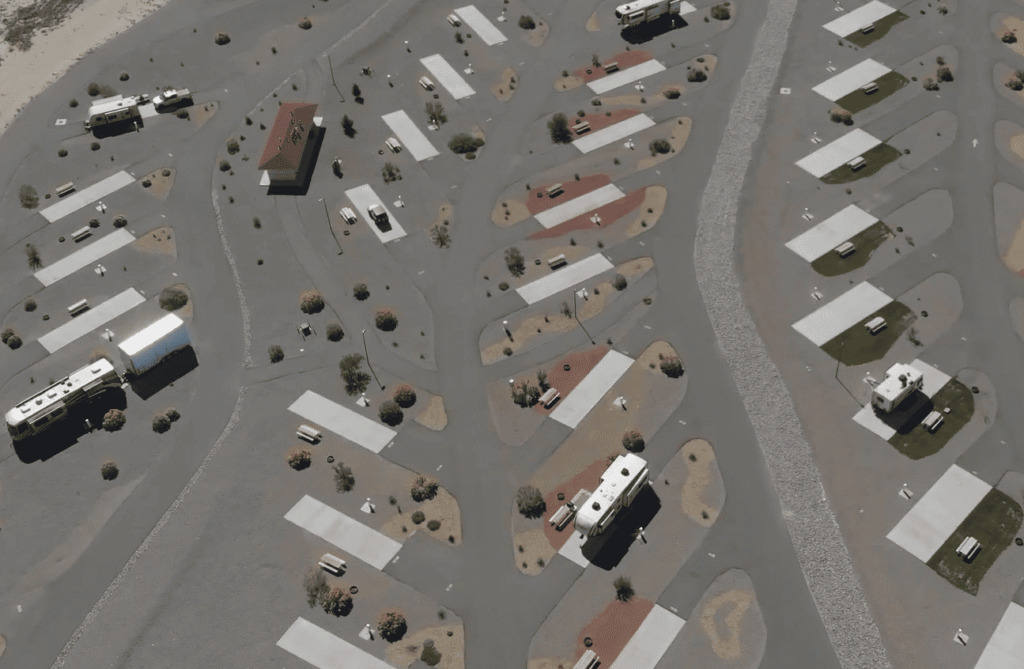
Resorts often build on the RV park model with pools, splash pads, clubhouses, camp stores, and planned activities. Staff may manage those activities, and some resorts also offer cabins or other rentals for friends who do not tow.
Sunburst RV Resort in Milton, Florida, combines full hookups with a pool. Splash Magic RV Resort in Northumberland, Pennsylvania, has more than 300 sites around a water-park-style pool complex, a much larger recreation setup.
A long amenity list matters only if your group will use it. A pool can be a strong draw for families with kids, while a clubhouse or activity calendar may mean little to guests who plan to explore nearby areas.
The resort label alone does not guarantee a particular amenity or level of service. Check the property’s actual features and whether planned activities suit your dates; then compare the experience with the cost of the stay.
How Much Does Each Type of Stay Cost?
Typical nightly rates are $25-$55 for campgrounds, $35-$75 for RV parks, and $60-$150+ for RV resorts. These ranges are guides, not quotes; an individual property’s location, dates, and amenities affect its actual nightly rate.
Typical nightly price ranges
Campgrounds often fall at the lower end of these typical ranges, while RV resorts can cost more when they offer extensive recreation. RV parks generally sit between them, though a particular property can fall outside its type’s usual range.
Use the ranges to set an initial budget, not to predict the bill for a specific reservation. Check what the listed rate covers and compare properties with similar locations and features.
Why location and season can change the bill
A waterfront campground on a July weekend can cost more than a highway RV park in April. The setting and date can matter as much as the category, so two nightly rates are useful to compare only when you consider what each stay offers.
Location can also shape demand and access to popular areas. A property near a busy destination may price differently from one farther away, even if their amenities and site types appear similar.
Compare the dates, amenities, and exact location when you review listings. The label alone cannot tell you whether the nightly rate fits your plans, and seasonal demand can shift the price at the same property.
There is no reliable average monthly campground rate to use as a benchmark. Ask the property for its actual monthly quote, since a nightly quote is only part of the decision for anyone considering a longer stay.
Can You Live or Stay Long-Term at an RV Park?
Some RV parks accept extended stays, but the length allowed depends on the property. Many welcome overnight, weekly, and monthly guests, while each property sets its own maximum stay and availability.

Monthly rates typically run 40%-60% below the cost of booking the same nights individually. That comparison can make a longer stay practical, though you still need the property’s actual quote and rules for your dates.
Long-term stays can suit workers on local contracts, including traveling nurses, as well as seasonal regulars. Many RV parks and resorts offer seasonal sites where a rig can stay in one spot from spring through fall.
If you are wondering what it is like living in an RV park, expect the details to depend on the property and your length of stay. Some guests use a park as a practical base for work; others return season after season.
The question “how long can you live at an RV park” has no single answer. A property may allow monthly or seasonal stays, while another may set a shorter limit or have no space available.
Living at a campground or keeping a permanent campsite also depends on that property’s rules. Ask about maximum stay, seasonal availability, and the terms attached to a longer reservation before treating any place as your base.
Once you know how long you can stay, match the property type to the actual purpose of your trip.
Which Option Fits Your Trip?
You may be choosing between a quiet natural setting and a fast, convenient overnight stop. Pick the property that supports what your group plans to do most, whether that means outdoor time, an easy RV setup, or activities on-site.
Choose a campground for the setting
A campground can fit a trip where trees, water, and time outside are the main attraction. You might plan to sit around a campfire, fish, or explore nearby trails, with the site serving as a place to return between activities.
This option can work well for families who want outdoor time together. Look at the setting and activities the property actually offers, since a campground’s location does not guarantee fishing access, swimming, or trails.
Choose an RV park for convenience or work
An RV park may suit you when reliable access and a straightforward setup matter more than a remote setting. Full utility connections and an easy arrival can help during road travel or a stay near a work contract.
That practical focus can make an RV park useful when you are covering miles or need a base near a job. Check the site layout and services against your rig and plans before choosing.
Choose an RV resort for on-site activities
A resort can make the property part of the destination when your group wants pools, playgrounds, or a planned activity calendar. Those amenities may keep families with kids busy without a separate outing every day.
Consider whether the activities will be open and useful during your stay. A pool-centered trip calls for different features than a visit where you expect to spend most of your time away from the property.
- A family seeking outdoor time may choose a campground.
- An RV traveler covering miles may prefer an RV park.
- A group planning a pool-centered stay may favor an RV resort.
The best match still depends on who and what the property allows. Confirm the rules especially carefully when your group includes tent campers or people with different accommodation needs.
Can Tents and Different RVs Use Both?
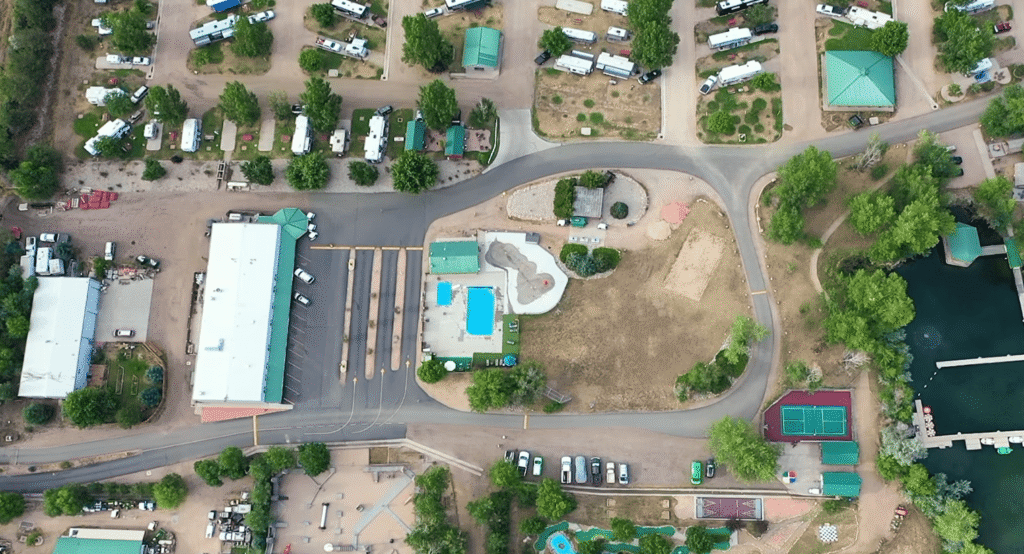
Campgrounds nearly always accept tents, while RV park policies can vary. Some RV parks are rig-only, and an RV resort may allow tents or restrict stays to particular accommodations.
A campground may host tents and RVs together, with different site types across the same property. If a tent is essential to your group, confirm the rules directly rather than assuming the listing’s category settles the question.
| Property type | Tent access | What to verify |
|---|---|---|
| Campground | Nearly always accepts tents | Tent-site rules and facilities |
| RV park | Some may be rig-only | Tent permission and pad suitability |
| RV resort | Varies by property | Allowed accommodations and site type |
The type of RV also matters. A large motorhome, a travel trailer, and a compact camper may have different space and access needs, even when all are allowed at the same property.
Compare the listed site with the vehicle and sleeping arrangements your group will bring. The words “RV site” do not tell you whether a tent can go there or whether your particular rig fits comfortably.
- Check the site length for the RV.
- Confirm tent permission for your group.
- Ask whether listed hookups are actually at the site.
Names and listings need closer scrutiny when property labels overlap. A place that combines campground and RV features may not fit every tent or rig without checking its site details.
Why Do Property Names Overlap?
Shady Shores RV Resort & Campground in Fair Haven, New York, puts both “RV Resort” and “Campground” in its name. It combines resort amenities with a wooded, lakeside campground setting, showing how one property can cross category lines.
No governing body certifies whether a property calls itself a park, campground, or resort. Some places use more than one label, and a name can serve as marketing as well as a description.
That overlap does not make a name useless, but it makes the feature list more important. One property may emphasize woods and water while offering resort amenities; another may use a similar title for a different mix.
Compare the amenity list and site details instead of deciding from the sign or title alone. Check whether the specific place has the features your group needs, rather than reading a category name as a promise.
Recent reviews can add useful context about how guests describe the property and its facilities. Look for comments related to the features you care about, such as the site layout, available amenities, or setting.
Once you have interpreted the label, check the details that affect your stay before making a reservation.
What Should You Check Before Booking?
You have a listing open, but one must-have feature is still unclear. Pause before booking: confirm any essential feature directly with the property, since amenities, access, and policies vary from place to place.
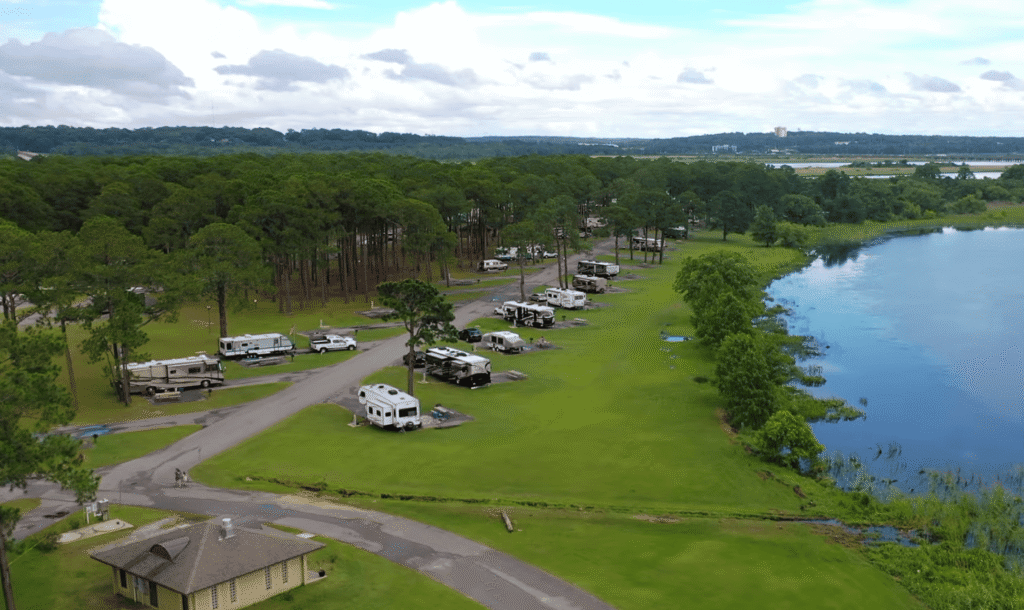
If a feature could make or break your stay, ask the property to confirm it before you reserve.
Use this five-item checklist to compare the listing with your group’s needs:
- Check the site length and whether it is back-in or pull-through.
- Confirm the exact hookups and electrical service.
- Ask about tent, cabin, or rental permissions when relevant.
- Check which listed amenities will be open during your stay.
- Review recent reviews, reservation terms, and the property’s maximum stay.
Make sure the site can accommodate your rig and that the listed services apply to the specific site you plan to reserve. A property-wide amenity may not be available at every site or during every visit.
Check recent guest comments alongside the reservation terms. Reviews can point to details worth asking about, while the property can explain current access, policies, and amenity availability for your dates.
Choose the place that fits your group’s priorities, then confirm availability for the intended dates. A clear answer about the one uncertain feature can make the reservation a much easier choice.
Conclusion
Choose a campground when the natural setting is central to your trip, and an RV park when RV convenience or a longer practical stay matters most. An RV resort makes sense when on-site amenities are part of the destination.
Start with what your group wants from the stay, then compare the individual site details rather than relying on the property label. Check the listing and confirm availability and reservation details for your dates before you book.